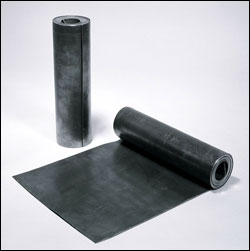
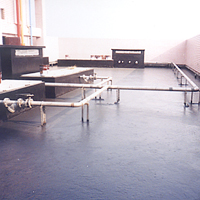
The other kind of building insulation is the thermal insulation
Buildings are large consumers of energy in all countries. In harsh climatic conditions, a substantial share of energy goes to the air-conditioning of buildings. This air-conditioning load can be reduced through many means; notable among them is the proper design and selection of building envelope and its components.
The term
thermal insulation can refer to materials used to reduce the rate of heat transfer or the methods and processes used to reduce heat transfer.
This section sets out the criteria against which insulation systems should be selected:
- Performance in use and longevity
- Stability and expected effective life.
- U-values achieved in practice, including basis of calculation of the design performance; for example, does the design performance assume some degree of initial loss.
- Vulnerability to factors affecting performance including moisture, movement and compression of fill, and vermin attack.
- Durability of treatments such as flame retardants.
• Impact on building design.
-Thickness of the insulation material and effect on floors and external wall thickness.
-Opportunities to incorporate the insulation into other aspects of building function; for example, creating falls to flat roofs using tapered products, or the use of a roof void as habitable space.
-The effect of retro-fit insulation solutions on a selection of facade options; for example, insulated render as opposed to rain screen panels.
-Ease of future upgrades.
-Initial capital cost.
• Build ability.
-Detailing required achieving thermal integrity, including avoidance of cold bridges, air-flow paths, opportunities for settlement or compression of fill and other movement during and after construction.
-Requirements for vapor and radiant barriers to maintain performance.
-Ease of forming to shape and size, and availability of pre-cut materials.
-Ease of testing and inspection.
-Ability to undertake remedial work without significant disturbance to other work.
-Health and safety considerations for installers.
General Advantages of Thermal Insulation
Thermal insulation has many advantages;
•It makes your home more comfortable by stabilizing the temperature; and a stable temperature means a decrease in the cost of heating or cooling the house, hence a decrease in the consumption of power.
•Efficient power usage saves you money, and it saves the environment by reducing green house gas output.
•Other advantages of Thermal insulation are the additional health and wellbeing benefits which are derived from a comfortable home.
Thermal insulation materials:
[1]Cellulose
Cellulose insulation made from recycled paper is becoming popular as an environmentally preferable material for building insulation. It can be treated with boric acid as a fire retardant.
[2]Glass wool
Glass wool is an insulating material, made from fiber glass, arranged into a texture similar to wool. Glass wool is produced in rolls or in slabs, with different thermal and mechanical properties.
[3]Mineral wool
Mineral wool, mineral fibers or man-made mineral fibers are fibers made from natural or synthetic minerals or metal oxides. The latter term is generally used to refer solely to synthetic materials including fiberglass, ceramic fibers and rock or stone wool. Industrial applications of mineral wool include thermal insulation, filtration, soundproofing, and germination of seedlings.
[4]Polystyrene
Polystyrene, sometimes abbreviated PS, is an aromatic polymer made from the aromatic monomer styrene, a liquid hydrocarbon that is commercially manufactured from petroleum by the chemical industry. Polystyrene is one of the most widely used kinds of plastic.
Polystyrene is a thermoplastic substance, which is in solid (glassy) state at room temperature, but flows if heated above its glass transition temperature (for molding or extrusion), and becoming solid again when cooling off. Pure solid polystyrene is a colorless, hard plastic with limited flexibility. It can be cast into molds with fine detail. Polystyrene can be transparent or can be made to take on various colors.
[5]Polyurethane
A polyurethane, IUPAC abbreviation PUR, but commonly abbreviated PU, is any polymer consisting of a chain of organic units joined by urethane (carbamate) links. Polyurethane polymers are formed through step-growth polymerization by reacting a monomer containing at least two isocyanate functional groups with another monomer containing at least two hydroxyl (alcohol) groups in the presence of a catalyst.
Polyurethane formulations cover an extremely wide range of stiffness, hardness, and densities. One of them the Low-density rigid foam used for thermal insulation and RTM cores.
[6]Vermiculite
Vermiculite is a natural mineral that expands with the application of heat. The expansion process is called exfoliation and it is routinely accomplished in purpose-designed commercial furnaces. Vermiculite is formed by hydration of certain basaltic minerals. Large commercial vermiculite mines currently exist in South Africa, China, Brazil and several other countries.
o molded shapes, bonded with sodium silicate for use in:
o high-temperature insulation
o refractory insulation
o fireproofing of structural steel and pipes
To Be Continued